
Earlier cancer detection saves lives.
The 5 year survival rate is higher when cancer is detected in stage I and II. [1]
But current traditional cancer screening is insufficient.
Low Availability
Over Half
^Calculated from GLOBOCAN 2024 estimated cancer deaths, excluding cancers recommended by the US Preventive Services Task Force (USPSTF). Accessed July 14, 2026.
of cancer deaths are not covered by recommended screening in the US [2,3]^
Low Accuracy
4 in 10
*Cumulative risk of 43.1% false positives over 14 screening exams from other tumor marker screening methods including chest radiograph, flexible sigmoidoscopy, CA-125, and transvaginal ultrasonography for women, and chest radiograph, flexible sigmoidoscopy, PSA, and DRE for men.
patients encounter false-positives from other tumor marker screening [4]*
Early stage is defined as Stage I and II. Late stage is defined as Stage IV.
Earlier cancer detection saves lives
The 5 year survival rate increases by up to 13.5x when detected in the early stage [4].

_section.png)
LucenceINSIGHT is a multi-cancer early detection (MCED)
next-generation sequencing (NGS) blood test that screens for cancers with 99% specificity (low false-positives).
The test uses Lucence's mirror barcoding technology to detect ctDNA and viral DNA. It can then predict tumor location with machine learning.
This is a prescription-only screening test.
This test is not intended for use as a diagnostic tool and should not replace the standard of care screening routine or the medical judgment of a healthcare provider. Intended for access and use by licensed physicians only.
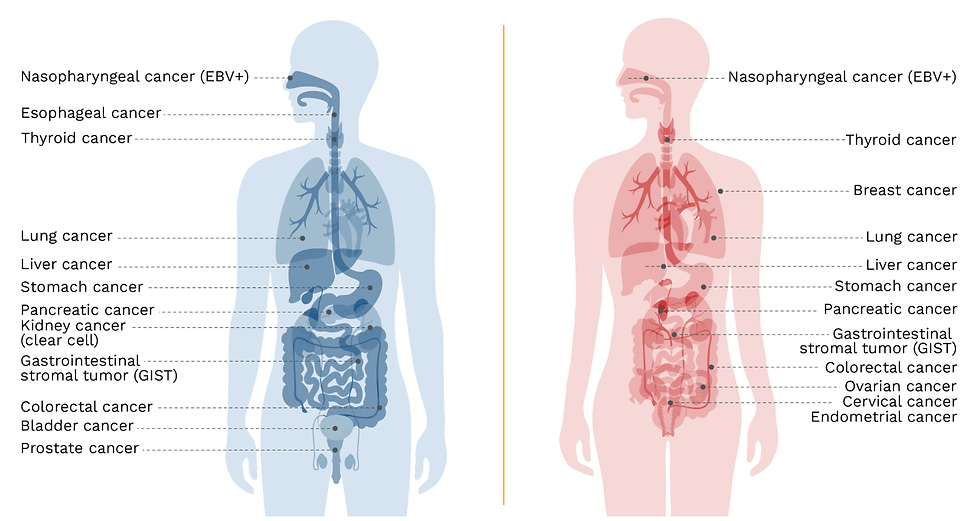
Personalized panel
Up to 12
cancers
Sensitivity [5]
80.9%
(low false-negative rate)
False-positive rate [5]
1%
(99% specificity)
LucenceINSIGHT Core

Essential screening for signals associated with 6 cancer types,
accounting for >50% of US cancer mortality. [6]
.png)
_whoitsfor.png)
Who it's for
For
-
Adults aged 40+ OR
-
Individuals with elevated cancer risk
(family history, diet, or lifestyle)
May not be best if you are*
-
Pregnant
-
In cancer remission for <3 years
-
Have had surgery, an allogeneic bone marrow transplant, or a blood transfusion within 2 weeks before sample collection
*Subject to your doctor's medical judgement
_ordering.png)
How it works
1. Order
Physician places the test order.
2. Blood draw
Blood sample is collected in-person or via mobile phlebotomy.
3. Shipment
Sample is shipped to Lucence via FedEx.
4. Lab testing
Sample is processed and results are shared with the physician.
5. Report review
Physician presents and discusses the final report.
Downloads
References:
-
Cancer Stat Facts. NIH NCI SEER. Accessed July 28, 2025. https://seer.cancer.gov/statfacts/.
-
Sung H, et al. CA Cancer J Clin 2026; 76(4): e70090. doi:10.3322/caac.7009.
-
Centers for Disease Control and Prevention. Cancer Screening Tests. Updated January 16, 2025.
-
Croswell, J. et al. Ann. Fam. Med. 2009; 7(3): 212–222.
-
Poh, J. et al. J. Clin. Oncol. 2024; 42(16): e15042. The ctDNA-based LucenceINSIGHT® demonstrated a specificity of 99.0% (310/313 self-declared healthy donors) and an overall sensitivity of 80.9% (233/288 cancer patients). Across the 21 tissue-of-origin classes analyzed, a high confidence prediction could be made in 62.4% (mean 73.6%, range 26.7%-100%) of cases with an overall accuracy of 87.7% (mean 84.9%, range 33.3%-100%).
-
Cancer Stat Facts. NIH NCI SEER. Accessed July 14, 2026. https://seer.cancer.gov/statfacts/. Cancer Mortality Coverage represents the percentage or range of US cancer deaths accounted for by the specific test panel: LucenceINSIGHT™ Core (6 cancer types), LucenceINSIGHT™ Me (6 fixed cancer types plus 3 selected; percentage varies by selection), or LucenceINSIGHT™ 12 (12 cancer types). Totals exclude cancer deaths from unspecified sites or other non-listed malignancies and are calculated as upper limits of US cancer mortality extracted from GLOBOCAN 2024 data. Cancer sites were matched to GLOBOCAN categories using the closest available sex-specific mortality data. All percentages derived from GLOBOCAN data are conservative estimates.